PENN STATE · MECHANICAL ENGINEERING

Julia
Langlois.

Mechanical design, test systems, and manufacturing analysis.

Seeking a full-time start Summer 2027

B.S. Mechanical Engineering expected May 2027

Explore my work
FEATURED DESIGN PROJECT01 / TEST SYSTEMS

Smart-tire energy
harvesting test rig.

My contribution
Requirements and engineering calculations

Four-person capstone · 2026–2027
Proposal and requirements phase

Explore the lead project
PROCESS DEVELOPMENTCAD & ASSEMBLYVALIDATIONWORKFLOW AUTOMATION

SELECTED WORK / FALL 2026

Decisions, methods,
and outcomes.

A test system in development, a winch prototype, and completed manufacturing analysis. Each case identifies my contribution and the current state of the work.

01 / TEST SYSTEM DEVELOPMENT

Smart-tire energy
harvesting test rig

Proposal and requirements phase

Develop a laboratory test rig to evaluate a bistable-beam energy harvester under controlled rotation and vertical vibration.

Research purpose
Support smart-tire energy-harvesting research at Penn State Behrend. The planned apparatus combines a motor-driven rotating assembly with an existing LDS V409 electrodynamic shaker.
My current contribution
Contributed to project requirements and supporting engineering calculations. This work translates the research objective and laboratory equipment constraints into specifications for the proposed test system.
Team deliverables to date
A written proposal, objective tree, engineering specification table with proposed evaluation methods, and project responsibilities and schedule. These are planning deliverables; fabrication and performance testing are future milestones.
Key design challenge
The rig must be developed while the harvester's final dimensions and mass remain open. Rotation, shaker loading, balancing, mechanical strength, and measurement requirements must be considered together.
Next work
Refine the requirements against equipment capabilities, compare concepts, and develop CAD and engineering analyses. The proposal assigns me the validation and safety lead area for later risk review, staged testing, inspection, uncertainty, and handoff.
Requirements developmentEngineering calculationsTest systems

PROPOSED OPERATING TARGETS

Define the system
before building it.

Selected preliminary specifications from the team proposal
Shaft speeds295 / 531 / 826 rpm
Average speed tolerance±12 rpm
Reference tire225/65R17
Drive and excitationRotation + vertical shaker
Purchase / fabrication / assembly budget$2,000 target

These are proposed requirements subject to design review, rather than measured capabilities. The budget excludes equipment supplied by the sponsor.

CURRENT EVIDENCE

Proposal and requirements documented.
Supporting calculations in development.
CAD, fabrication, and testing planned.
02Nittany Lion LiftGear-driven winch · torque and gear-ratio analysisTesting pending

DESIGN & ASSEMBLY · FALL 2026

A 3 V drive, a timed load-hauling task.

My contribution: Calculated required torque and gear ratio for a 3 V gear-driven winch and contributed to the team's CAD model. The team's design review documents 60:1 and 90:1 output reductions with multiple spool radii.

Current outcome: The team fabricated the winch with 3D-printed gearbox components. Performance testing is the next project milestone.

Next step: Test the assembled mechanism against the competition requirements and use the results to guide iteration.

3 Vdrive specification

Completed: torque / gear-ratio calculations and CAD contribution.

Team milestone: fabricated prototype.

Pending: performance measurements.

03 / MANUFACTURING PROCESS DEVELOPMENT

Propeller casting
simulation

Analysis completed

Evaluate how adding a riser affects feeding, solidification time, and shrinkage porosity in a propeller casting.

My contribution
Evaluated two supplied casting geometries in SOLIDCast and examined material-density and solidification-time results to assess riser feeding and hub shrinkage.
Engineering decision
Used density and solidification-time plots together to locate late-solidifying hub regions and assess whether the added riser addressed the shrinkage defect.
Outcome
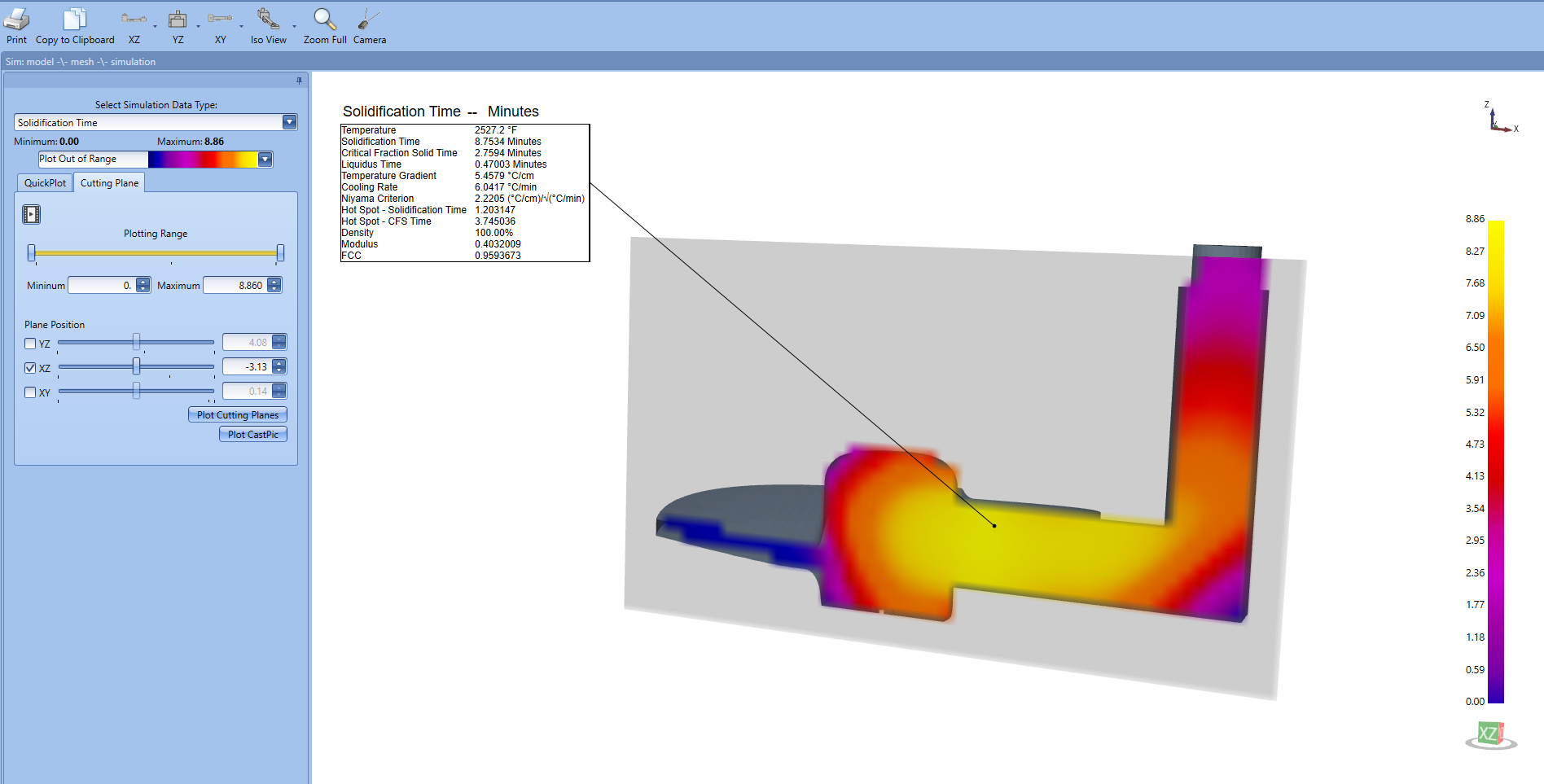
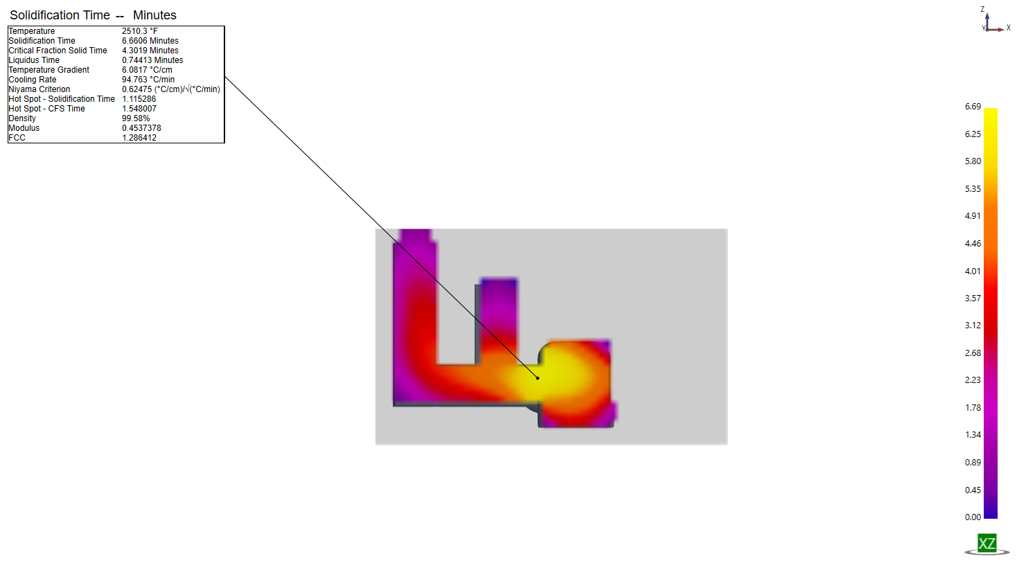
The maximum simulated solidification time decreased from 8.86 to 6.69 minutes, approximately 24%. The sampled hub density changed from 64.34% to 63.72%; the low-density region remained. The revised design therefore required further development.
Next iteration
Recommended evaluating changes to riser size or position, or adding a local chill near the hub to alter the solidification sequence.
SOLIDCastSolidificationRiser feeding

SIMULATION COMPARISON

The hub defect
remained unresolved.

Results from the two-design study
MeasureBaselineWith riser
Max. solidification time8.86 min6.69 min
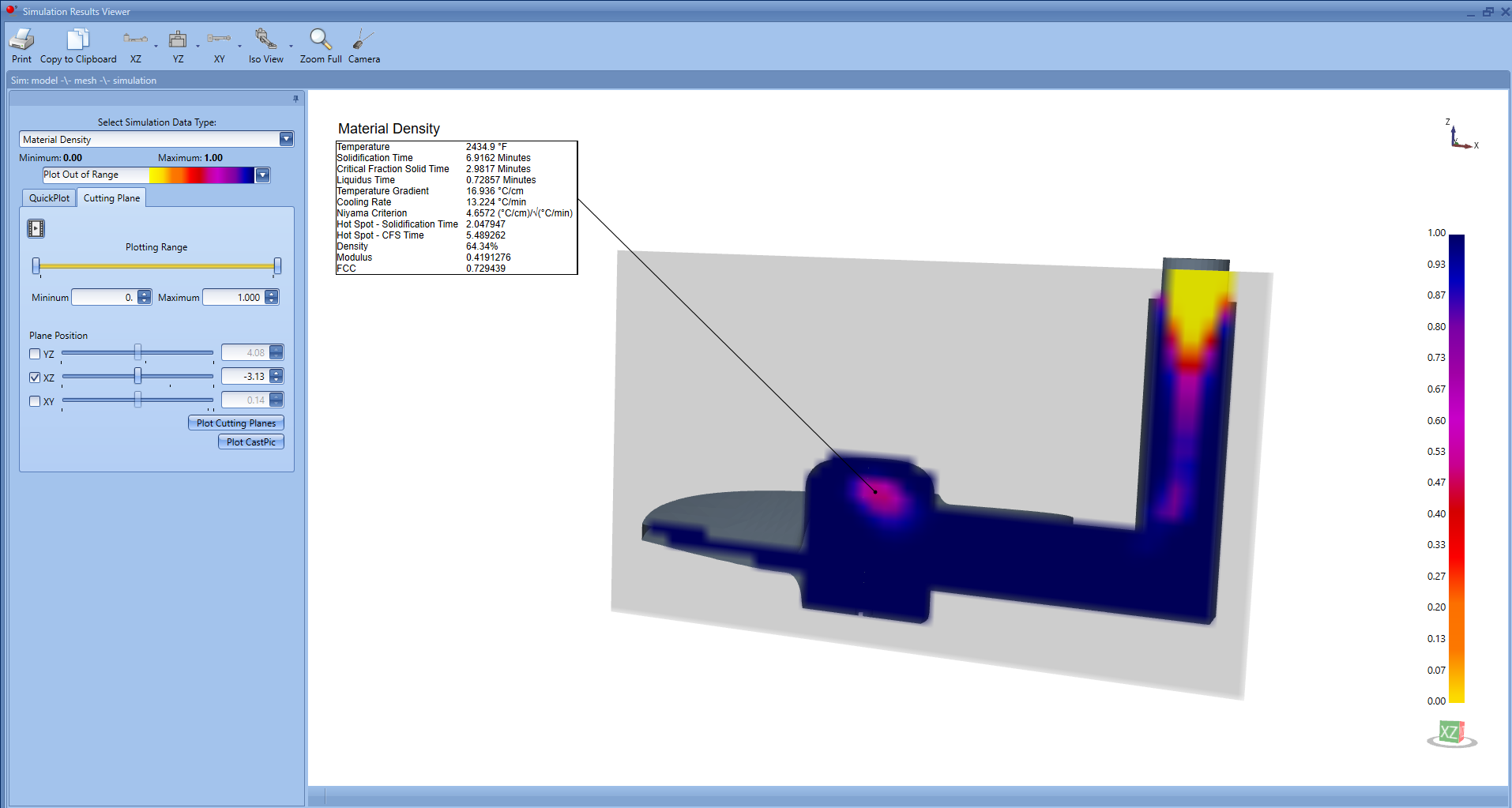
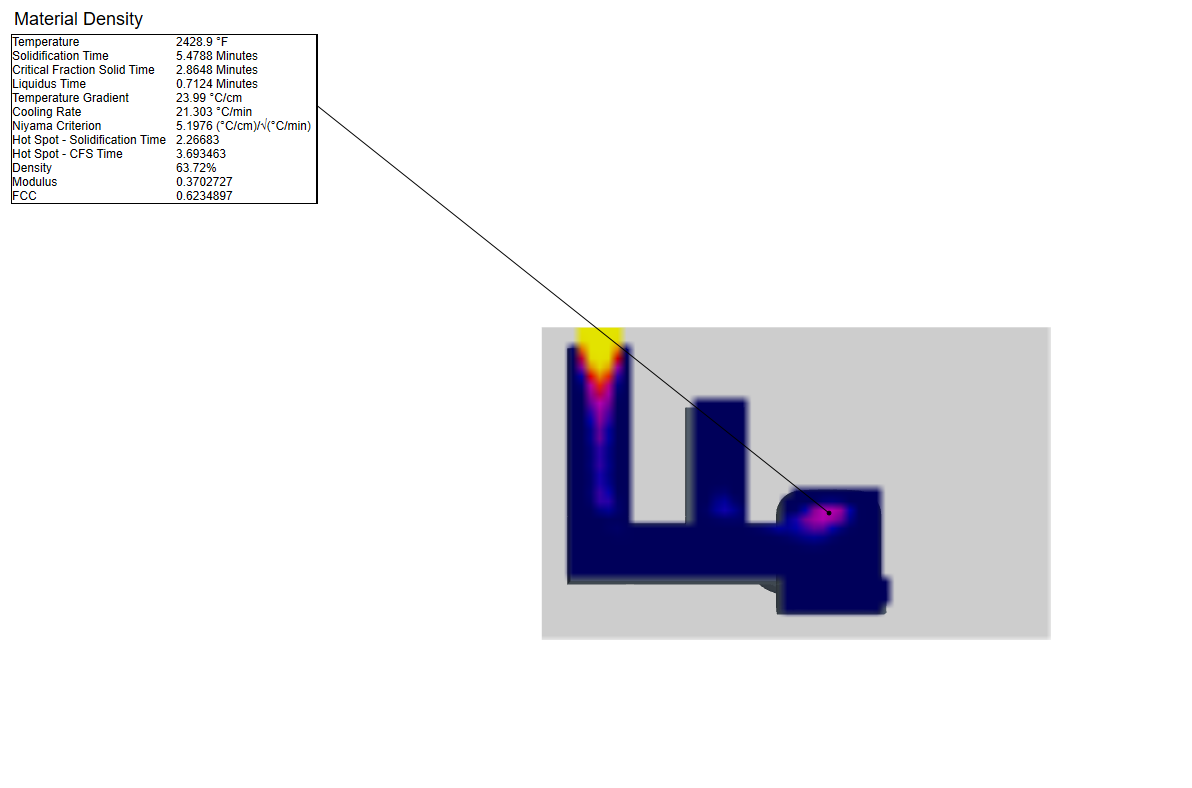
Sampled hub density64.34%63.72%
Hub porosityPresentRemained
TIME DIFFERENCE−2.17 min

Maximum time decreased 2.17 min (approximately 24%). Sampled hub density decreased 0.62 percentage points. Low density persisted in the hub, so the riser required further development.

SIMULATION EVIDENCE

Inspect the two designs.

SOLIDCast baseline cutting plane: a low-density region in the propeller hub, with selected-point density 64.34 percent.
Baseline · no added riserSelected hub-region point: 64.34% predicted density. View full image ↗
SOLIDCast revised design with an added riser: a low-density region remains in the hub, with selected-point density 63.72 percent.
Revised · added riserSelected hub-region point: 63.72% predicted density. View full image ↗

Original figures from my casting simulation report. Selected-point density values describe local samples. Solidification-time legends use different upper limits; compare the labeled values rather than color alone.

04 / SYSTEM VALIDATION

Building automation
point validation

Internship work completed

Check the consistency of building automation information across engineering documents.

My contribution
Validated more than 1,000 BAS alarm and trend points during my Siemens internship by cross-checking controls drawings, submittals, and equipment cut sheets.
Method
Resolved inconsistencies, documented sensor ranges for customer setpoint review, and recorded installation discrepancies in Bluebeam using plans, P&IDs, and control and wiring drawings.
Outcome
Completed document-based validation of 1,000+ points and provided documented sensor ranges for customer setpoint review.
Controls drawingsBluebeam RevuTechnical documentation
1,000+

alarm and trend points validated

  1. 01Review controls drawings
  2. 02Cross-check submittals & cut sheets
  3. 03Resolve inconsistencies
  4. 04Document ranges for review

Siemens · Building Automation Systems
May–August 2026

MECHANICAL DESIGN / PROJECT NOTES

Earlier CAD experience.

Drawing interpretation, measurement, and concept modeling from my Ameridrives internship.

05Industrial CAD & safety-bracket conceptAmeridrives · drawing interpretation and hardware measurementCAD concept

MECHANICAL ENGINEERING INTERNSHIP · SUMMER 2019

Translate existing information into 3D geometry.

My contribution: Created SolidWorks models from existing engineering drawings. For a separate safety-bracket concept, took measurements of couplings and a rotating adapter and used those measurements to establish the CAD geometry.

Outcome: Produced SolidWorks models and a safety-bracket concept based on existing drawings and measured hardware dimensions.

Relevant experience: Reading engineering drawings, measuring existing hardware, and translating dimensions into a mechanical model under engineering guidance.

CADdocumented outcome

SolidWorks modeling
Drawing interpretation
Hardware measurement
Concept development

PROFESSIONAL EXPERIENCE

Technical work.
Real constraints.

Experience coordinating installation work, checking engineering documents, and improving field-data workflows.

MAY–AUGUST 2026 / NEW YORK, NY

Siemens

Project Management Intern · Building Automation Systems

Developed BAS power plans by calculating VA loads and assigning equipment to circuits; coordinated installation feasibility with electricians. Validated 1,000+ alarm and trend points against engineering documentation.

JULY 2023–PRESENT / NEW YORK, NY

AECOM

Scientist · Full-time through July 2025, part-time thereafter

Led field operations across 70+ survey sites and built a reporting workflow using Power Automate and R that reduced processing time by 50%, prevented data loss, and helped keep the project under budget. Troubleshot field pumps, wrote quick-start procedures, and trained teammates.

50%less processing time
70+survey sites

MAY–AUGUST 2019 / ERIE, PA

Ameridrives International

Mechanical Engineering Intern

Built SolidWorks models from engineering drawings and developed a safety-bracket concept using measurements of existing coupling and adapter hardware.

ABOUT & EDUCATION

Mechanical engineering,
with a broader perspective.

I'm completing my mechanical engineering degree at Penn State. My earlier work in environmental science involved field equipment, data analysis, and coordinating technical work. I now bring that experience to mechanical design, manufacturing coursework, and engineering validation.

julia.langlois@alumni.psu.edu

PENNSYLVANIA STATE UNIVERSITY

B.S. Mechanical Engineering

Expected May 2027 · GPA 3.97
Dean's List every semester

Current coursework: Engineering for Manufacturing, Additive Manufacturing Lab, Machine Design, Applied CFD.

B.S. Wildlife & Fisheries Science

2023 · GPA 3.96 · Magna cum laude

TOOLS & INVOLVEMENT

SolidWorks · Autodesk Inventor · SOLIDCast · ANSYS Fluent · MATLAB · FDM 3D printing · caliper inspection · Excel · R · Power Automate · Bluebeam Revu

ASME Officer · Tau Beta Pi

FULL-TIME AVAILABILITY / SUMMER 2027

Let's talk engineering.